
English
- 中文
- English
- Español
- Portugal
- Русский
How to Properly Balance and Align Truck Wheels for Optimal Performance
Click:
Time:2024-12-14 16:51:25
How to Properly Balance and Align Truck Wheels for Optimal Performance
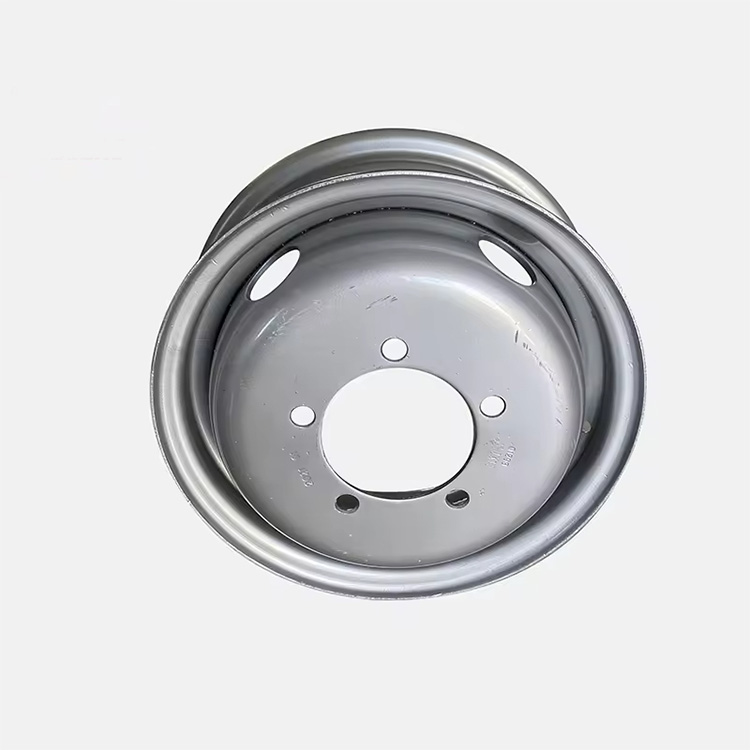
Maintaining properly balanced and aligned truck wheels is essential for optimal performance, safety, and the longevity of your vehicle’s tires. Incorrect balance or alignment can lead to uneven tire wear, poor handling, reduced fuel efficiency, and even damage to your truck's suspension. Here's how to ensure your truck wheels are balanced and aligned correctly.
1. Wheel Balancing
Wheel balancing addresses uneven weight distribution around the wheel and tire assembly. Over time, imperfections in the wheel or uneven tire wear can cause the tire to be off-balance, leading to vibrations in the steering wheel or the cabin.
To balance your truck’s wheels, a technician uses a specialized machine that spins the wheel and tire assembly to identify areas where weight needs to be adjusted. Small weights are then placed on the rim to counterbalance any uneven distribution.
- Signs of imbalance: Steering vibrations at higher speeds, uneven tire wear, or a shaky ride.
- When to balance: It’s recommended to balance your wheels every 5,000-7,000 miles, or whenever new tires are installed.
2. Wheel Alignment
Wheel alignment refers to the adjustment of the truck’s suspension, ensuring that the wheels are set at the correct angles relative to the road. Proper alignment is crucial for safe handling and tire longevity.
There are three key angles to consider: camber (tilt of the wheels inward or outward), toe (the direction the wheels point), and caster (the angle of the steering pivot). If these angles are off, the truck can pull to one side or have difficulty staying straight, causing uneven tire wear and reduced fuel efficiency.
- Signs of misalignment: The truck pulls to one side, uneven or rapid tire wear, or crooked steering wheel.
- When to align: Perform a wheel alignment whenever you notice these signs or after significant impacts like hitting a curb or pothole.
Conclusion
Regular balancing and alignment ensure your truck rides smoothly, steers accurately, and maximizes tire life. By keeping these maintenance tasks on your checklist, you can optimize your truck’s performance and ensure a safer driving experience.
Prev : The Impact of Wheel Size on Truck Handling and Fuel EfficiencyNext : Innovations in Truck Wheel Technology What’s Next for the Industry
你的喜欢,就是我坚持写下去的能量器
YouArticle
已有0人推荐
Contact
Tel:+86-374-3199855
E-mail: admin@xchengfeng.com
Wechat / Whatsapp:18603992600
Address1: Private science and technology economic park, Weidu disctrict,Xuchang city,Henan province, China.
Address2: NO.107 Huayuan North Road,Zhengzhou Area (Jinshui) of China (Henan) Pilot Free Trade Zone

Copyright © Xuchang Yenuo Auto Parts co.,Ltd. 豫ICP备2020034620号